The next generation of technological breakthroughs won’t happen in classrooms alone. They’ll take shape in research labs, through hands-on experiments, and in the development of technologies that solve real-world challenges.
To celebrate last week’s National STEM Day and National Career Development Month, we’re recognizing an important resource helping make that innovation possible: shared spectrum.
Across the country, universities are using the Citizens Broadband Radio Service (CBRS) band to support research, test emerging technologies, and equip students with practical skills. From wireless communications to artificial intelligence (AI), these three universities demonstrate how shared spectrum is helping shape the future of STEM.
University of Notre Dame: Putting Spectrum Sharing to the Test
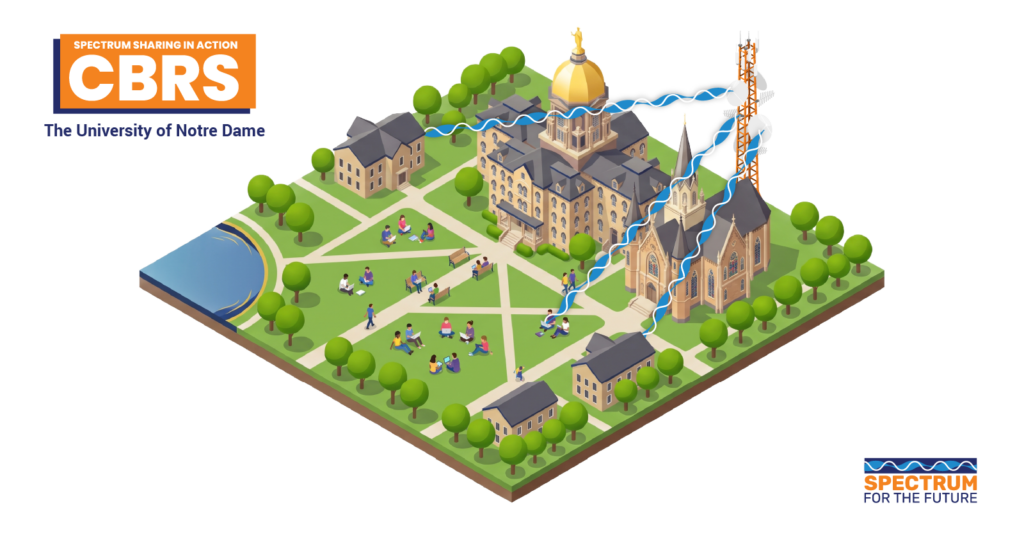
At the University of Notre Dame, students are exploring the future of wireless technology firsthand.
Through its Spectrum Sharing Sandbox (S3), Notre Dame uses CBRS infrastructure to study wireless performance, interference, and spectrum coexistence.
Undergraduate research opportunities also allow students to compare CBRS and Wi-Fi performance using smartphones and virtual reality headsets, providing practical experience in wireless engineering and data analysis.
These efforts are helping prepare future engineers to tackle the challenges of an increasingly connected world.
Carnegie Mellon University: Building the Networks Behind Emerging Technologies
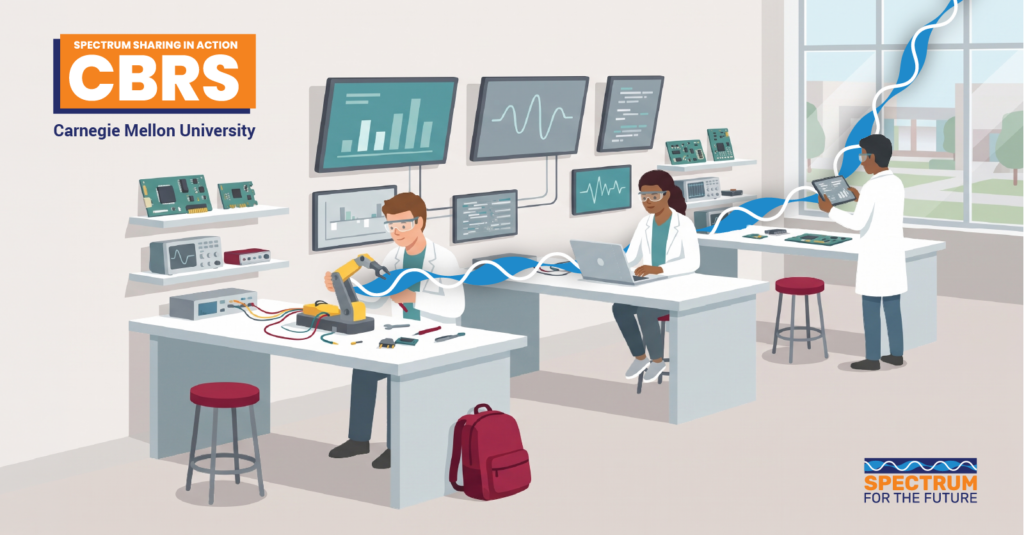
At Carnegie Mellon University, researchers are using CBRS to explore technologies that depend on fast, reliable wireless connectivity.
The university’s Living Edge Lab uses private wireless infrastructure powered by CBRS to advance research into edge computing and next-generation applications.
In 2024, Carnegie Mellon upgraded its network to private 5G, reducing round-trip latency to approximately one-third of its previous LTE network’s performance, expanding opportunities to test emerging technologies.
University of Nebraska-Lincoln: Bringing Wireless Innovation to the Next Generation
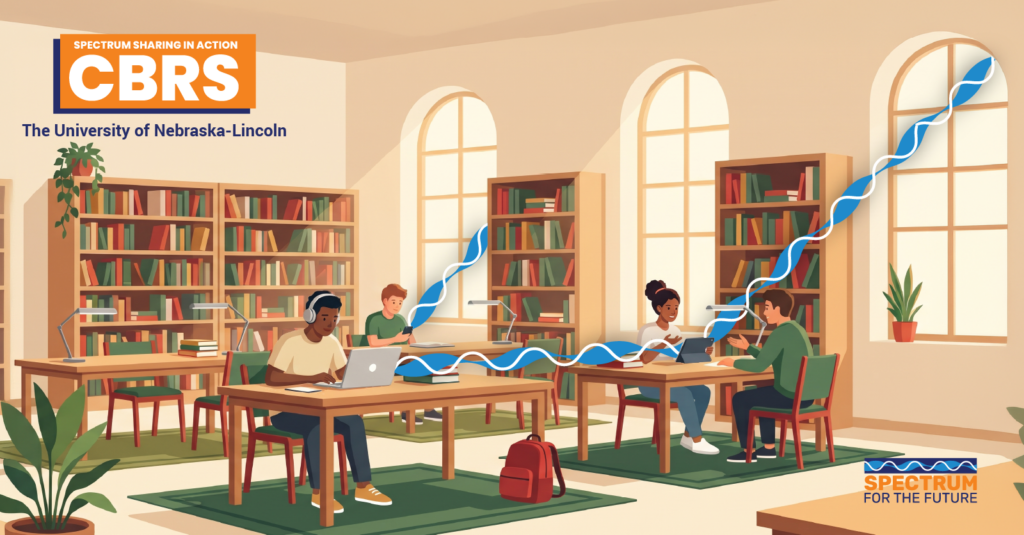
At the University of Nebraska-Lincoln, CBRS is supporting advanced wireless research while creating new opportunities for STEM education.
The university’s Husker-Net initiative uses CBRS-enabled private 5G infrastructure to support research into wireless communications, edge computing, and applications such as precision agriculture and connected devices.
Building on this foundation, a recently announced National Science Foundation-funded initiative aims to expand student engagement through new university courses, research opportunities, and K-12 STEM outreach.
Supporting Tomorrow’s Innovators
From hands-on wireless experiments to advanced computing research, these universities demonstrate how CBRS is helping students and researchers turn ideas into actions.
As technology continues to evolve, preserving access to shared spectrum will help ensure universities have the tools and flexibility to keep experimenting, discovering, and preparing the next generation of leaders.